

English
Content
Most outdoor resurfacing projects start the same way: the concrete or old decking underneath is still structurally sound, but the surface is cracked, gray, and tired, and a full rebuild costs more than the space is worth. A WPC interlocking deck tile was designed for exactly this situation. Our short answer, after years of producing and exporting these tiles: if the base is firm, reasonably flat, and drains water, interlocking WPC tiles are the fastest and most forgiving way to lay a wood-look outdoor floor. No screws, no glue, no contractor. The sections below explain how the tiles are built, where they perform well, what they cost you in maintenance, and what we would check before ordering.
A WPC interlocking deck tile is a prefabricated panel, typically 300 x 300 mm (about 12 x 12 inches) and 20 to 25 mm thick. Wood fiber or wood flour is compounded with polyethylene, UV stabilizers, and antioxidants, then extruded into narrow slats. The slats are mounted onto a plastic grid base, and that base carries interlocking tabs on all four edges. Two tiles connect with a firm downward press, and the assembled floor is held in place by gravity and the weight of the tiles around it.
This structure is the whole point of the product. A traditional composite deck needs joists, clips, fasteners, and someone who understands spacing and levels. An interlocking tile needs none of that: the grid base creates the ventilation gap, the tabs handle alignment, and one person can cover a six-square-meter balcony in an afternoon.
The slat material is also what separates a tile that lasts from one that fails. Untreated wood slats on cheap tiles absorb rain, gray out, and grow mold along the joints. Wood-plastic composite slats do not rot, splinter, or feed insects, which is why we compound the raw material and extrude the slat profile ourselves instead of buying loose slats on the open market.
Interlocking tiles perform best on surfaces that are hard, stable, and reasonably level. In export projects across Europe and the Americas, the most common bases are:
Avoid laying tiles directly on soil, sand, or grass. The tabs hold the tiles to each other, but the ground beneath has to carry them; a soft base lets individual tiles rock and the joints work loose.
One question comes up constantly: can the tiles go over cracked or uneven concrete? Unevenness of a few millimeters is absorbed by the grid base, but deep dips should be leveled and flaking concrete repaired first. Our guide to installing interlocking tiles over existing concrete and uneven surfaces walks through the limits and the preparation work in detail.
Easy-to-install WPC interlocking DIY deck tiles Easy-to-Install DIY WPC Interlocking Deck TilesThese WPC interlocking tiles offer a timber look with simple one-person DIY installation, no installer needed. They suit the practical middle ground between wood, stone, and plastic discussed here, working well over slightly uneven concrete on balconies, gardens, and courtyards.View Product →
Interlocking tiles are also offered in natural wood, stone, porcelain, and pure plastic versions, and the honest answer is that each suits a different buyer. Wood tiles look authentic but demand seasonal oiling and eventually splinter. Stone and porcelain last for decades but are heavy to handle and can turn uncomfortably hot in full sun. Pure plastic tiles shrug off water yet often flex and look thin underfoot. WPC sits in the practical middle: it sheds water like plastic, reads like stained wood, and asks for little more than an occasional wash.
| Criterion | WPC tile | Natural wood tile | Stone or porcelain tile | Pure plastic tile |
|---|---|---|---|---|
| Moisture behavior | Does not absorb water, rot, or splinter | Absorbs water; needs sealing to resist rot | Waterproof, though porous stone can stain | Waterproof |
| Maintenance | Occasional wash with soapy water | Seasonal oiling and resealing | Low; routine cleaning only | Minimal |
| Surface in full sun | Warm but generally walkable barefoot | Moderate surface temperature | Can become very hot in dark colors | Can become very hot in dark colors |
| Handling and cutting | Light; cuts with standard saws | Light; cuts with standard saws | Heavy; cutting produces dust | Lightest to handle |
| Typical outdoor life | 10 to 15 years with basic care | 5 to 8 years with regular care | 15+ years, though impact can chip edges | 8 to 12 years; fades if not UV stabilized |
If you want to weigh the alternatives against each other, our stone and artificial grass deck tile ranges use the same press-together principle with completely different surface materials.
Water is where WPC earns its keep. Composite slats do not soak up moisture the way timber does, and the grid base holds the walking surface above the deck so rain and splash water drain through the openings. That matters most around pools and on balconies in rainy climates. Two practical warnings come straight from our production floor: standing water is still the enemy, so whatever sits under the tiles must drain; and surface texture decides wet traction, so choose a brushed, embossed, or grooved face for barefoot areas instead of a polished one.
Stable WPC interlocking deck tiles with a slip-resistant tooth-groove surface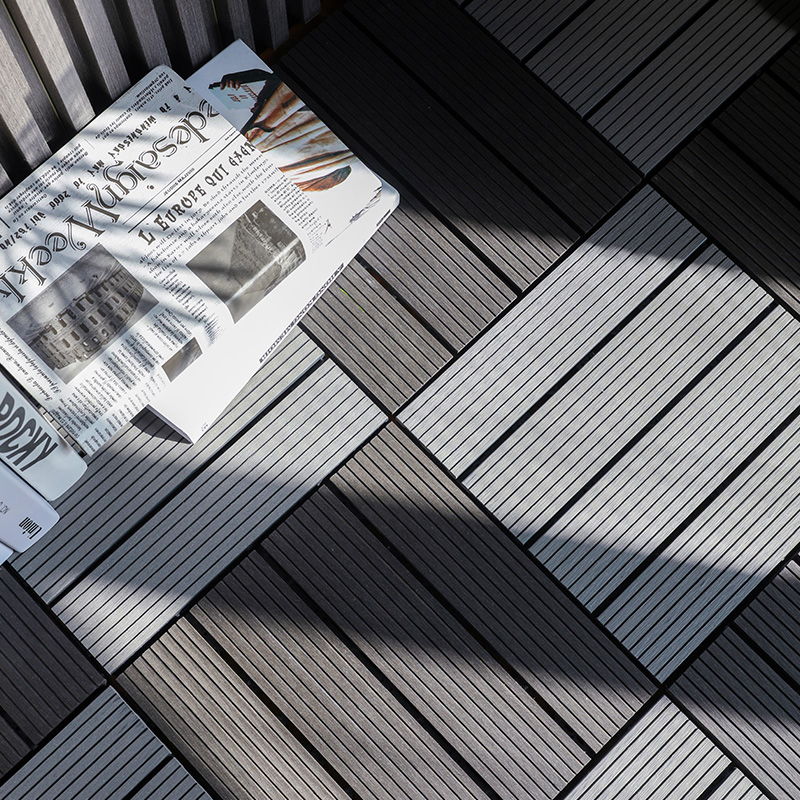 Tooth-Groove Surface WPC Interlocking Deck TilesWith a tooth-groove face for wet traction and a grid base that lets rainwater drain through, these weighted tiles stay stable after installation. They are a fitting choice for poolside areas and rainy-climate balconies where slip resistance and drainage matter most.View Product →
UV exposure is the other long-term factor. Quality tiles have stabilizers compounded into the plastic during extrusion, and the difference shows years later: unstabilized product chalks and fades within a summer or two, while stabilized slats keep their tone far longer. Ask suppliers for weathering or UV test data rather than trusting photographs, and treat third-party reports from laboratories such as INTERTEK or SGS as part of the minimum paperwork.
Under normal patio use, meaning foot traffic, furniture, and the occasional dropped planter, both slats and base handle the load comfortably. Very narrow furniture legs and heavy stationary objects concentrate weight on single points, so spread that load with pads where possible. For poolsides and exposed terraces, drainage clearance and placement matter enough that we wrote a separate guide on how these tiles handle rain and pool water exposure.
Whether you are a homeowner ordering a pallet or a distributor planning a container, a short list of specifications separates a tile that will satisfy from one that will generate complaints:
On apartment balconies, overall height is often the deciding factor, since door thresholds and railing gaps leave little room. Color matters more than buyers expect, too: gray and light wood-grain tones hide dust, pollen, and bird marks far better than deep browns, which is why our gray wood-grain balcony tile has become one of the most requested references.
Gray wood-grain WPC interlocking deck tiles for balcony flooring Gray Wood Grain WPC Interlocking Balcony Deck TilesDesigned for apartment balconies, this gray wood-grain tile keeps a low profile at door thresholds and hides dust, pollen, and bird marks better than darker tones. Its weight keeps interlocked tiles stable for everyday outdoor use.View Product →
As a manufacturer, we would add one last habit: order a sample or a single carton, click the tiles together and apart a dozen times, leave them in your own sun for a few weeks, and walk on them with wet feet. It is the cheapest insurance available in this product category.
The WPC interlocking deck tile is not the answer to every outdoor floor. Large structural decks still deserve a framed decking system, and raw ground needs a proper sub-base before any tile goes down. But for resurfacing concrete, reviving a tired deck, or turning a bare balcony into usable living space, it offers the best balance of cost, speed, and appearance we know of. Measure carefully, insist on UV and slip data, keep spares in storage, and the floor will ask almost nothing of you for the next decade.



ANHUI LINYUANWAI NEW MATERIALS CO., LTD
We are a professional manufacturer of WPC plastic wood products.
 86-19550246256
 86-19706802653
 SHIZIPU ECONOMIC DEVELOPMENT ZONE. LANGXI COUNTY, XUANCHENG CITY. ANHUI PROVINCE
Scan code Attention to follow us

Copyright © ANHUI LINYUANWAI NEW MATERIALS CO., LTD All Rights Reserved.
 English
 Français

