

English
Content
A decking quote can land anywhere between 14 and 38 USD per square metre, and the two boards may look identical in a photograph. The difference is not markup. It sits in the board core, in the surface layer, and in the small metal clips nobody photographs. Buyers who learn to read those three things stop comparing prices and start comparing what a deck will look like after five summers.
Wood plastic decking is a composite board extruded from a mix of thermoplastic and wood flour, and it behaves like neither pure timber nor pure plastic.
The plastic, usually HDPE recovered from bottles or virgin PE, is what keeps water out of the core. The wood flour, typically 40 to 60 percent of the mix by weight, is what gives the board stiffness, screw-holding strength and a surface that does not feel like a cutting board underfoot. Because there is nothing left inside the board for fungi or termites to eat, no preservative treatment is required and no rot cycle starts.
Wood plastic decking: an extruded composite of thermoplastic (normally HDPE or PE) and wood flour, formed into hollow or solid boards. The polymer content blocks moisture and rot; the wood content supplies stiffness and grip. It is not timber, and it is not a plastic-only product.
Two properties surprise first-time buyers. The board moves, for one thing: a 5.8 m plank changes length by roughly 10 mm across a typical seasonal temperature swing, which is why end gaps exist and why a deck pinned hard against two walls will crack. The second is that wood plastic decking is low maintenance, not zero maintenance. Dirt still has to come off, and a wet layer of leaves left sitting for a season will leave a stain.
The durability, cost and maintenance trade-offs against treated timber are broken down in this comparison of WPC decking against traditional wood.
| Property | Treated timber | Standard WPC | Co-extruded WPC |
| Moisture and rot | Needs pressure treatment; absorbs water | 0.5 to 0.8 percent water absorption by weight | Same core, closed surface layer |
| Maintenance | Re-stain or re-oil every 1 to 2 years | Soap and water washing | Soap and water washing |
| Colour stability | Greys under UV | Fades under strong UV | Surface layer holds colour longer |
| Wet slip | Slippery when smooth-finished | Around R10 | Around R10 to R11 |
| Typical service life | 8 to 12 years | 10 to 15 years | 15 to 25 years |
| Relative cost per square metre | Low | Medium | High |
None of those figures are fixed. Joist spacing, ventilation and drainage shift them further than the name printed on the board ever will.
The cross-section matters more than the colour, because it decides load capacity, drainage and how the deck feels underfoot.
Wood plastic decking leaves the factory in four basic profile families, and each one is aimed at a different job:
Above that sits the co-extruded board, where a polymer shell of roughly 0.4 to 0.6 mm is extruded around the core. That shell is where scratch resistance and colour retention come from, and it typically adds 15 to 25 percentage points to the cost. It is also the reason a standard board greys and dulls by year five in direct sun while a capped board does not.
If a deck has to survive ten years on a south-facing terrace, the extra spent on a co-extruded surface usually buys more years than the extra spent on a thicker square-hole board.
 LINYUANWAI Co-Extrusion WPC Decking 148x23mm for Outdoor GardensFor south-facing decks comparing co-extruded surfaces, this LINYUANWAI WPC board comes in 148x23mm and multiple colors for outdoor gardens and pools.View Product →
Four numbers predict how a deck will look in year eight: joist spacing, thermal movement per board, water absorption, and wet slip rating.
Water absorption is the number most buyers never ask for. A board sitting near 2 percent will cup after one wet winter, because moisture enters and leaves the core unevenly and the top face swells more than the bottom. A board at 0.5 percent stays flat. When a supplier cannot produce a measured figure for a specific batch, the buyer is already guessing.
Most wood plastic decking failures trace back to two mistakes: boards installed tight against a wall or against another board, and fasteners driven too close to a cut end.
The sequence below is not difficult, but the order matters. A step-by-step installation guide for WPC decking covers the same stages with the cutting details included.
Where the substrate is already flat concrete or tile, interlocking deck tiles skip the entire joist system. They click together without framing or fixings, which usually makes them the more practical answer for a rented balcony or a temporary terrace, provided the base drains properly.
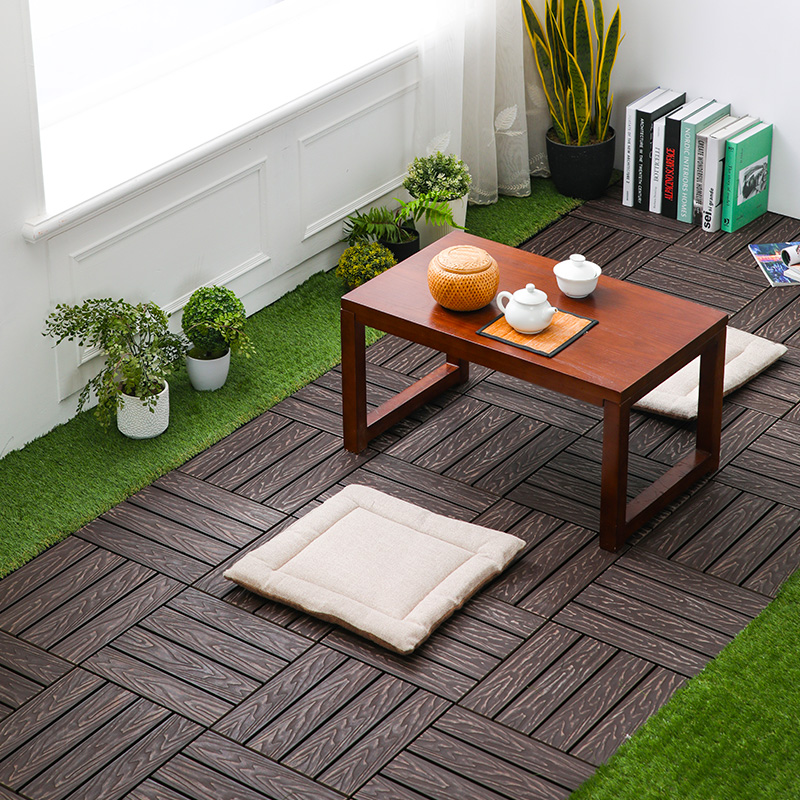 300x300mm Wood Grain WPC Interlocking Deck Tiles for BalconiesWhere a flat base means no joist system, these 300x300x20mm WPC interlocking tiles suit balconies, patios, rooftops, and gardens.View Product →
Three questions separate quotes quickly: the water absorption figure for the batch, the grade of stainless steel in the clips, and the load test at the joist spacing you actually plan to use.
A board rated at 0.5 percent water absorption will not cup after a wet winter. A board at 2 percent will. That difference is invisible at order stage and obvious after the first cold season.
Installation hardware deserves its own line in the specification, from the joist through to the stainless clip, because a deck is only as stable as the joint between board and frame.
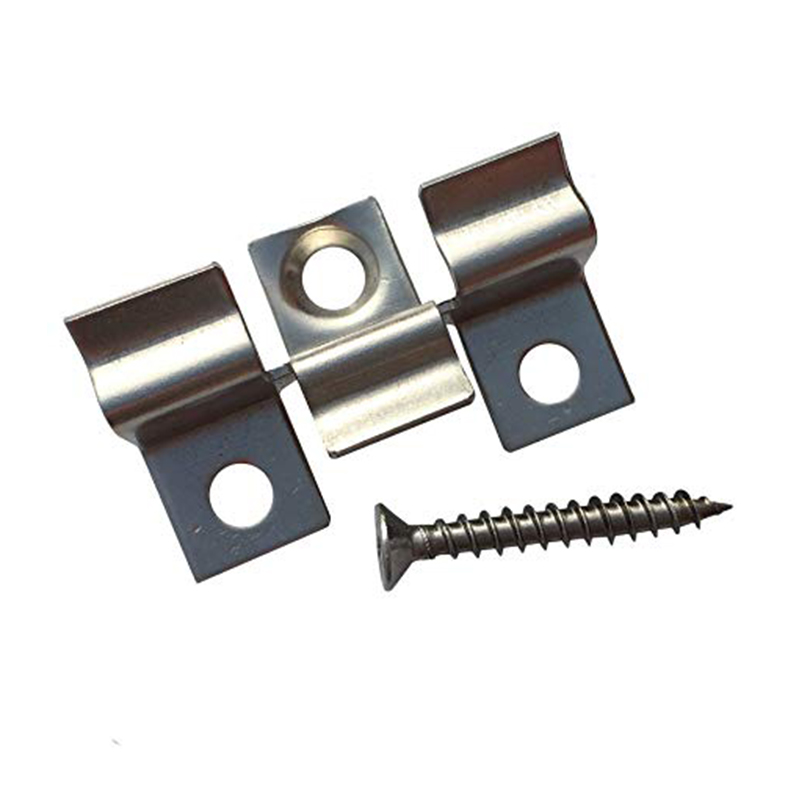 Stainless Steel WPC Decking Clips from ANHUI LINYUANWAIInstallation hardware is central to deck stability; this stainless steel WPC clip is listed for fastening composite wood decking under WPC accessories.View Product →
Yes, dark boards store heat. Surface temperature under strong sun commonly runs 20 to 30 degrees above air temperature, which is uncomfortable barefoot. Lighter finishes run a little cooler, but no composite is pleasant in direct sun, and this matters most around pools.
No. Paints and sealers do not bond reliably to the polymer content and will flake within a season. Regular washing with soap and water is the only maintenance required. If a board starts to grey, a soft brush and mild cleaner restores more than a new coating would.
Residential hollow board typically gives 10 to 15 years, while co-extruded board in a strong UV region commonly reaches 15 to 25 years. Installation shortens service life more often than the material does, particularly when end gaps are omitted.
Standard decking cannot, because it needs airflow and drainage underneath. Interlocking deck tiles can, provided the concrete is flat and drains. Where water ponds on the slab, fix the drainage before laying anything on top of it.
One decision is worth making last: whether the goal is the lowest price per square metre, or a surface that is installed once and not reconsidered for a decade.
The gap between a 14 USD quote and a 38 USD quote is rarely anyone cheating anyone. The low figure is usually hollow board, standard colour, and hardware priced separately. The higher one is often co-extruded board, batch reports, and clips already in the box. List the profile, the process and the fixings, and how long a wood plastic deck will last stops being a guess.



ANHUI LINYUANWAI NEW MATERIALS CO., LTD
We are a professional manufacturer of WPC plastic wood products.
 86-19550246256
 86-19706802653
 SHIZIPU ECONOMIC DEVELOPMENT ZONE. LANGXI COUNTY, XUANCHENG CITY. ANHUI PROVINCE
Scan code Attention to follow us

Copyright © ANHUI LINYUANWAI NEW MATERIALS CO., LTD All Rights Reserved.
 English
 Français

